- PathologyOutlines 2026-10-15 教科书更新专题:按 WHO 将 PanNEN 分为 PanNET / PanNEC / MiNEN,分子谱截然不同。
- 约 40% PanNET 突变集中于 MEN1、DAXX、ATRX;PanNEC 则以 TP53、RB1、KRAS 为主,可与导管腺癌重叠。
- DAXX/ATRX 丢失常提示 G3 进展与转移风险;多组学甲基化与表达谱有助于鉴别 NET 与 NEC。
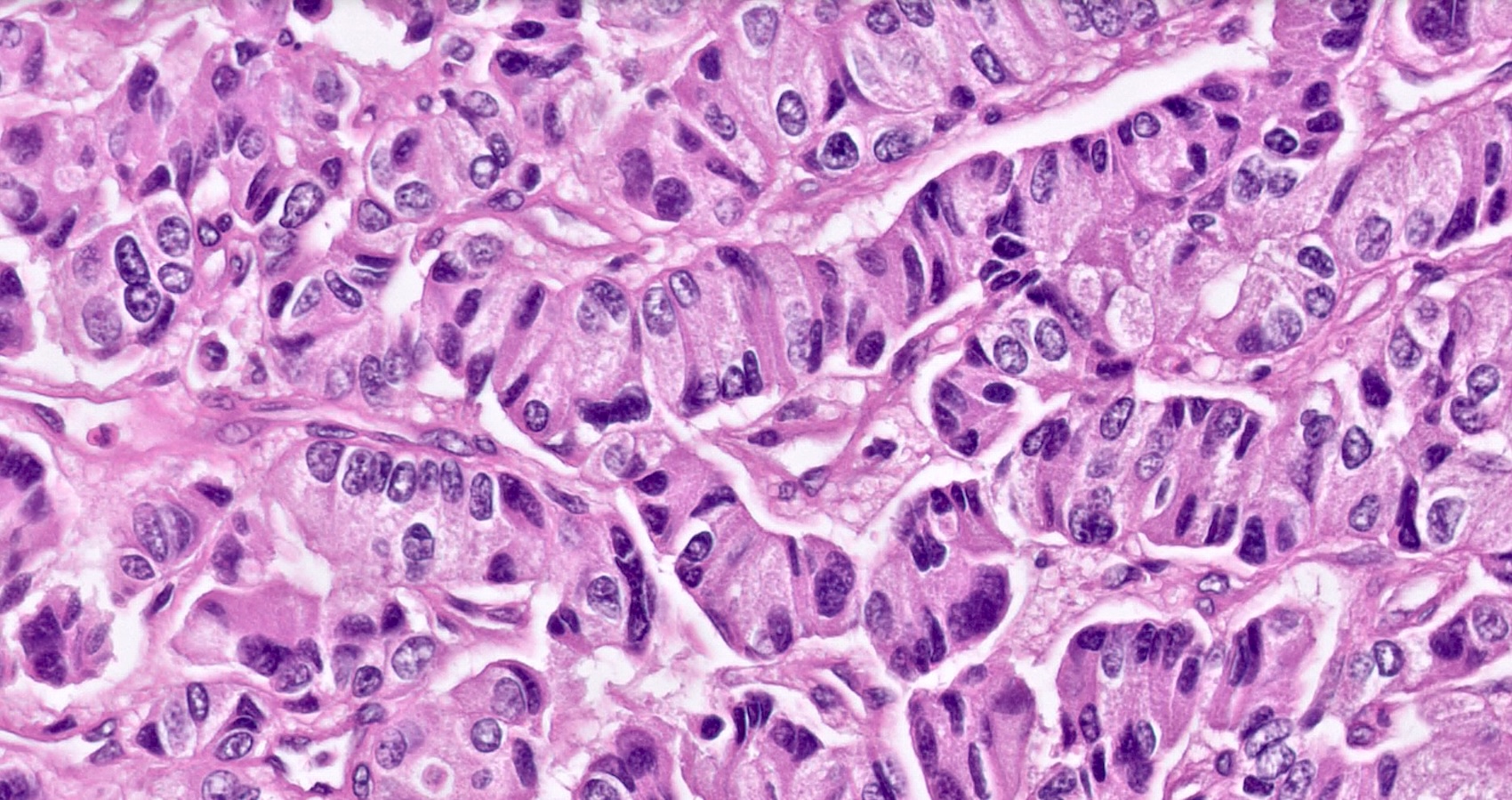
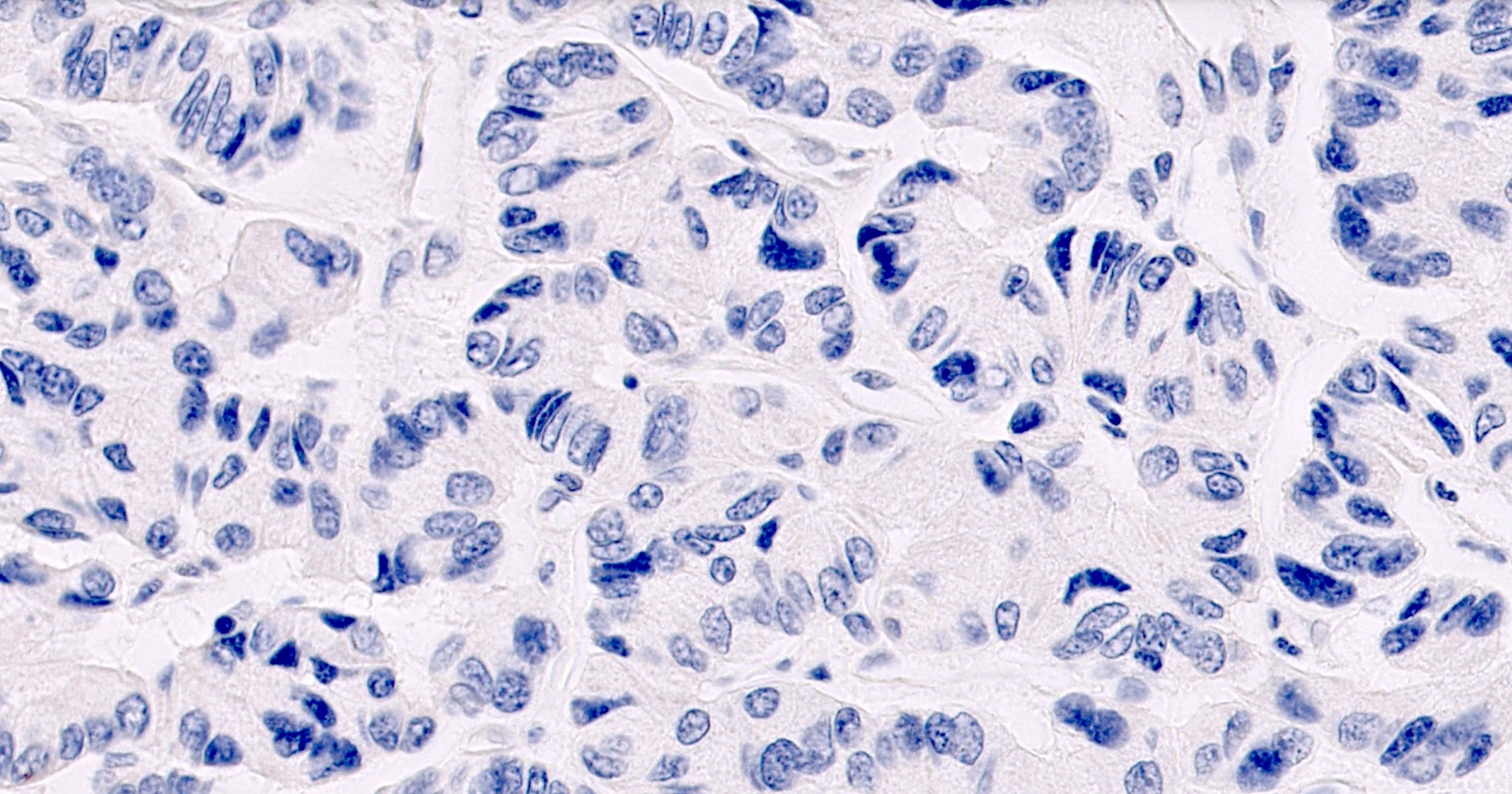
- 附 10 张镜下与免疫组化图(含 G3 PanNET 野生型 p53/完整 RB1 vs PanNEC 突变型 p53)及 2 道练习题。
收录范围:PathologyOutlines 专题「Molecular genetics of pancreatic neuroendocrine neoplasms」全文及镜下配图(2026-10-15 Textbook Updates)。
定义 / 概述
- 胰腺神经内分泌肿瘤(PanNENs)按 WHO 肿瘤分类分为 3 组:胰腺神经内分泌瘤(PanNETs)、胰腺神经内分泌癌(PanNECs)和混合性神经内分泌—非神经内分泌肿瘤(MiNENs)
- PanNET:高分化肿瘤;依据核分裂象计数与 Ki67 增殖指数分为 3 级(G1、G2 与 G3)
- PanNEC:低分化且高级别;再分为小细胞型(SCNEC)或大细胞型(LCNEC)
- 从遗传学角度看,PanNET、PanNEC 与 MiNEN 具有不同的遗传及表观遗传改变与表达谱
要点
- 约 40% 的 PanNET 携带 MEN1、DAXX 与 ATRX 突变(Endocr Pathol 2025;36:44)
- PanNEC 最常携带 TP53 与 RB1 突变,并可获得与胰腺导管腺癌类似的 KRAS 突变
- MiNEN 的突变景观通常反映各肿瘤成分各自的遗传学改变
术语
- 胰腺神经内分泌肿瘤(pancreatic neuroendocrine neoplasms)
- 胰腺神经内分泌瘤(pancreatic neuroendocrine tumor)
- 胰腺神经内分泌癌(pancreatic neuroendocrine carcinoma)
- 混合性神经内分泌—非神经内分泌肿瘤(mixed neuroendocrine non-neuroendocrine neoplasm)
ICD 编码
- ICD-O
- ICD-10
- ICD-11
- 2C10.1 - 胰腺神经内分泌肿瘤
体细胞突变
- PanNET
- 最常见突变:ATRX、DAXX 与 MEN1(Hum Pathol 2024;150:51、Nat Commun 2018;9:4158)
- 其他反复突变:染色质重塑与端粒维持(ARID1A、SMARCA4)、组蛋白修饰(MLL3、SETD2)、DNA 损伤修复(MUTYH、CHEK2、BRCA2、ATM)、mTOR 信号通路(TSC1、TSC2、PTEN、DEPDC5)、缺氧诱导因子(HIF)信号通路(EPAS2、VHL)以及其他包括细胞周期调节因子如 CDKN1A 与 CDKN1B
- 罕见突变:TP53 与 RB1
- 几乎不出现的突变:KRAS 与 SMAD4(Nature 2017;543:65、Cancer Discov 2022;12:692、Front Oncol 2022;12:967071、Virchows Arch 2026;488:45)
- PanNEC
- 最常见突变:TP53、RB1、KRAS(World J Gastroenterol 2022;28:1009、Cancer Discov 2022;12:692、Hum Pathol 2018;77:70)
- 较少见突变:BRAF、APC 等
- 典型缺如的突变:MEN1、端粒改变(DAXX / ATRX)、DNA 损伤修复(MUTYH、CHEK2、BRCA2)、染色质重塑(ARID1A、SMARCA4)以及 PI3K / mTOR 信号(EWSR1 融合、PTEN、HIF1A / EPAS2)通路
- MiNEN
- 混合性导管腺癌—神经内分泌癌:兼具普通导管腺癌(KRAS、CDKN2A、TP53、SMAD4)与 PanNEC(TP53 与 RB1)的遗传学改变
- 混合性腺泡—神经内分泌癌:改变类似纯腺泡细胞癌(APC / β-catenin 通路改变、BRAF 重排、DNA 修复缺陷及 BRCA 通路缺陷)
胚系突变 / 遗传综合征
- 家族性无功能性 PanNET
- 最常见突变:MEN1(多发性内分泌腺瘤病 1 型)、VHL(von Hippel-Lindau 病)、TSC1 / TSC2(结节性硬化)及 NF1(1 型神经纤维瘤病)
- CDKN1B(MEN4 综合征)与 MAX(MEN5 综合征)
- GCGR(胰高血糖素细胞增生与肿瘤形成 [GCHN])
- 已有报道见 MUTYH 胚系突变
- 家族性功能性 PanNET
- MAFA 相关家族性胰岛素瘤病:MAFA 特异性突变 p.S64F
- 胰岛素瘤:偶见于 MEN1、NF1 与结节性硬化综合征
- 胰高血糖素瘤:约 10% 与 MEN1 综合征相关
- 生长抑素瘤:MEN1、VHL,偶见 NF1 综合征
- 胃泌素瘤:MEN1、NF1 / NF2、结节性硬化综合征
- 异位激素产生性 PanNET:MEN1 与 VHL 综合征
转录组学 / 表观遗传改变
- 多组学数据,如 RNA 表达与 DNA 甲基化谱,有助于区分 PanNET 与 PanNEC(Nature 2017;543:65、Cancer Discov 2022;12:692、Front Oncol 2022;12:967071、Virchows Arch 2026;488:45)
- PanNET 中异常 DNA 甲基化与更具侵袭性的肿瘤行为、进展及转移相关(Lancet Oncol 2020;21:e431)
- 全基因组 DNA 低甲基化:携带 DAXX / ATRX 突变的 PanNET 呈现全基因组 DNA 低甲基化,驱动端粒替代延长(ALT)与染色体不稳定性(CIN)(Endocr Relat Cancer 2015;22:L13、Endocr Relat Cancer 2017;24:137)
- 抑癌基因高甲基化:最常见为 RASSF1A、CDKN2A / TP16、MGMT 与 RAR β(Ann Surg 2003;238:423)
- 按表达谱,PanNEC 可聚类为导管型与腺泡型(Cancer Discov 2022;12:692)
示意图 / 表格
PanNET 与 PanNEC 的分子遗传特征 特征 PanNET PanNEC 基因组不稳定性 低 高 最常见体细胞突变 MEN1、DAXX、ATRX TP53、RB1 进展期 PanNET 的体细胞改变 TP53、RB1、CDKN2A 基因融合 KMT2A::BCOR、EWSR1::BEND2 NTRK1::CCDC19、ETV6::NTRK3 RNA 表达 有助于区分 PanNET 与 PanNEC DNA 甲基化
参考文献:Front Oncol 2022;12:967071、Virchows Arch 2026;488:45、Hum Pathol 2024;150:51、Nat Commun 2018;9:4158、World J Gastroenterol 2022;28:1009、Cancer Discov 2022;12:692、Hum Pathol 2018;77:70、Mod Pathol 2023;36:100065、Pathol Int 2022;72:411、Cancer Res 2020;80:3620、NPJ Precis Oncol 2025;10:7、Gastroenterology 2018;154:2060、Virchows Arch 2023;482:507、Nature 2017;543:65、Front Oncol 2023;12:1031396、Oncotarget 2018;9:35809
临床特征
- PanNET 中位发病年龄约 57 岁;可为功能性(20%–30%)或无功能性(70%–80%),前者常因激素相关症状较早显现(Pancreas 2025;54:e423)
- PanNEC 表现更具侵袭性,症状起病迅速;几乎均为无功能性,常因瘤体负荷或转移性疾病相关症状就诊(Radiographics 2020;40:1240、World J Gastroenterol 2022;28:1009)
预后因素
- 在 PanNET 中,DAXX / ATRX 丢失常与高级别(G3)进展、转移潜能及复发相关(Nat Commun 2018;9:4158、Am J Surg Pathol 2016;40:1192、Gut 2022;71:961)
- TP53 突变可在 PanNET 向高级别转化过程中获得,且在该组中通常与 CDKN2A 改变互斥(Mod Pathol 2023;36:100065)
- 某些基因或其启动子的表观遗传改变 / 异常甲基化(如 CDKN2A 与 MGMT)与 PanNET 的侵袭行为及不良预后相关(Gastroenterology 2018;154:2060、J Clin Endocrinol Metab 2003;88:1367)
- 家族性 PanNET 中 VHL 第 3 外显子突变,尤其是密码子 161 / 167,转移风险更高(Endocr Relat Cancer 2018;25:783)
病例报告
- 45 岁女性,胰腺肿瘤伴多发肝转移(J Clin Med 2025;14:4432)
- 69 岁男性,表现为体重下降及糖尿病恶化(Front Med (Lausanne) 2022;9:951834)
- 81 岁男性,腹痛、恶心、稀便及阵发性潮红(J Clin Med 2023;12:6617)
治疗
- 生长抑素类似物(奥曲肽、兰瑞肽等)靶向生长抑素受体(SSTR),是最常用的治疗,因约 70% 的 PanNET 表达 SSTR(Endocr Relat Cancer 2008;15:701)
- 依维莫司(mTOR 抑制剂)用于治疗 PanNET(Cancers (Basel) 2020;12:1988)
- Belzutifan(特异性 HIF-2α 抑制剂)已获批用于治疗 VHL 病及其相关肿瘤(Clin Cancer Res 2022;28:4843)
镜下(组织学)描述
- PanNET:高分化肿瘤,呈巢状、器官样与小梁状结构;核相对均一,异型性轻
- PanNEC:低分化癌,呈膨胀性、不规则巢状至实性结构,可伴坏死(单个细胞或大片);核异型性更明显;可分为小细胞型或大细胞型(Am J Clin Pathol 2025;163:804、Histopathology 2018;72:168、Am J Surg Pathol 2016;40:1192)
- VHL 突变型 PanNET:可出现核异型、透明细胞变、嗜酸细胞变、富血管、胰岛异型增生及囊性形态等特征
镜下(组织学)图像
供图:Yan Hu, M.D., Ph.D. 与 Wei Chen, M.D., Ph.D.
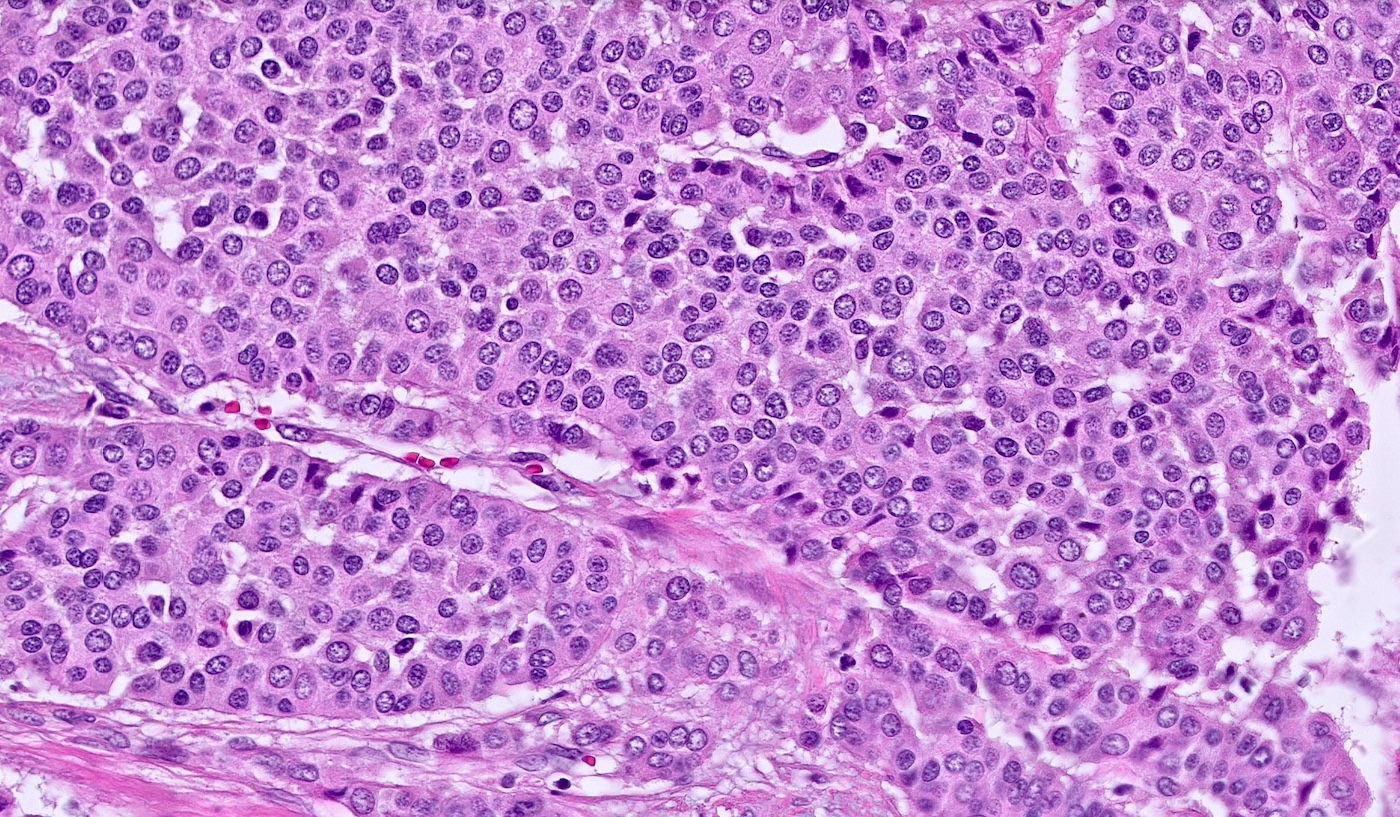
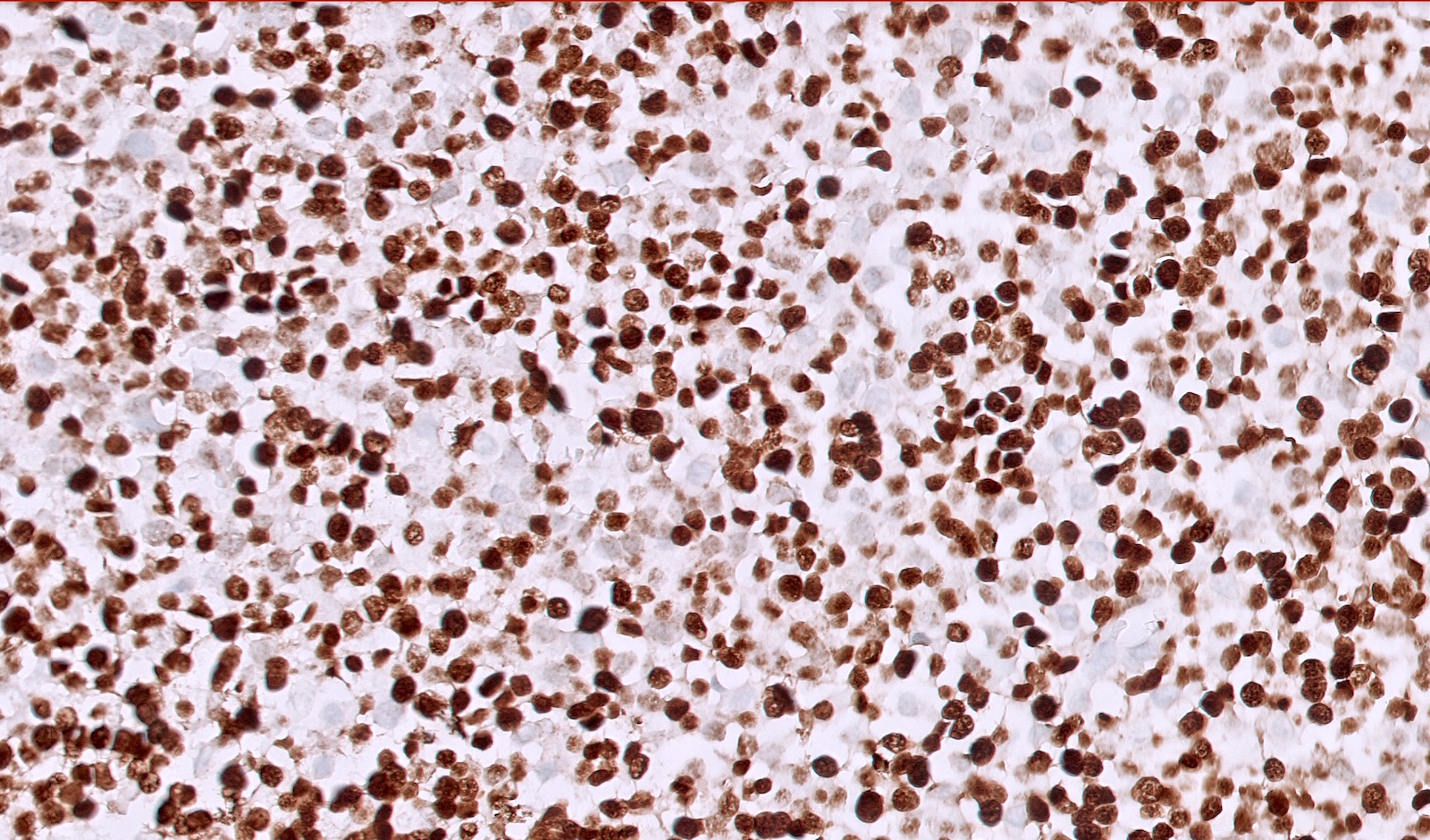
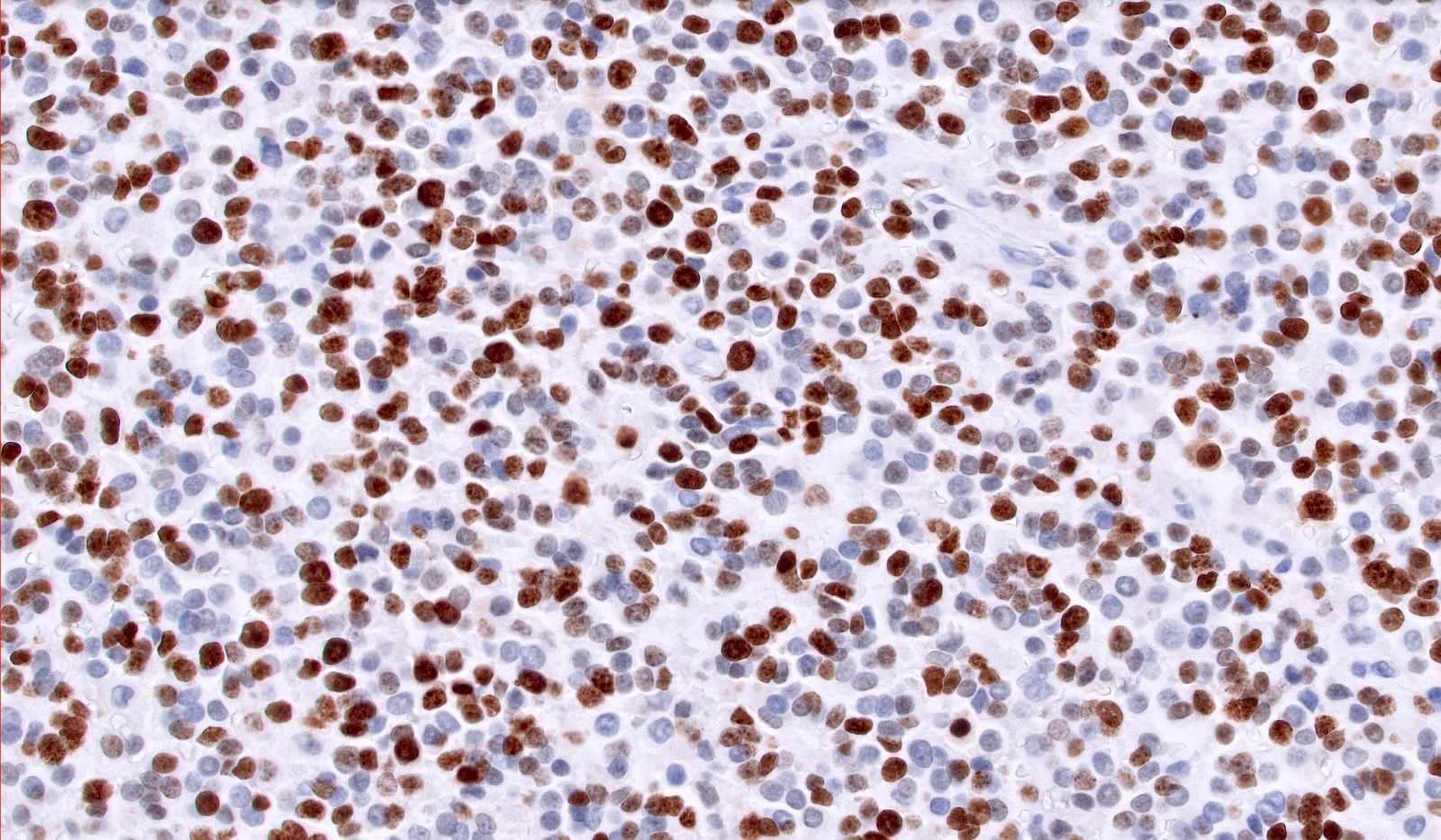
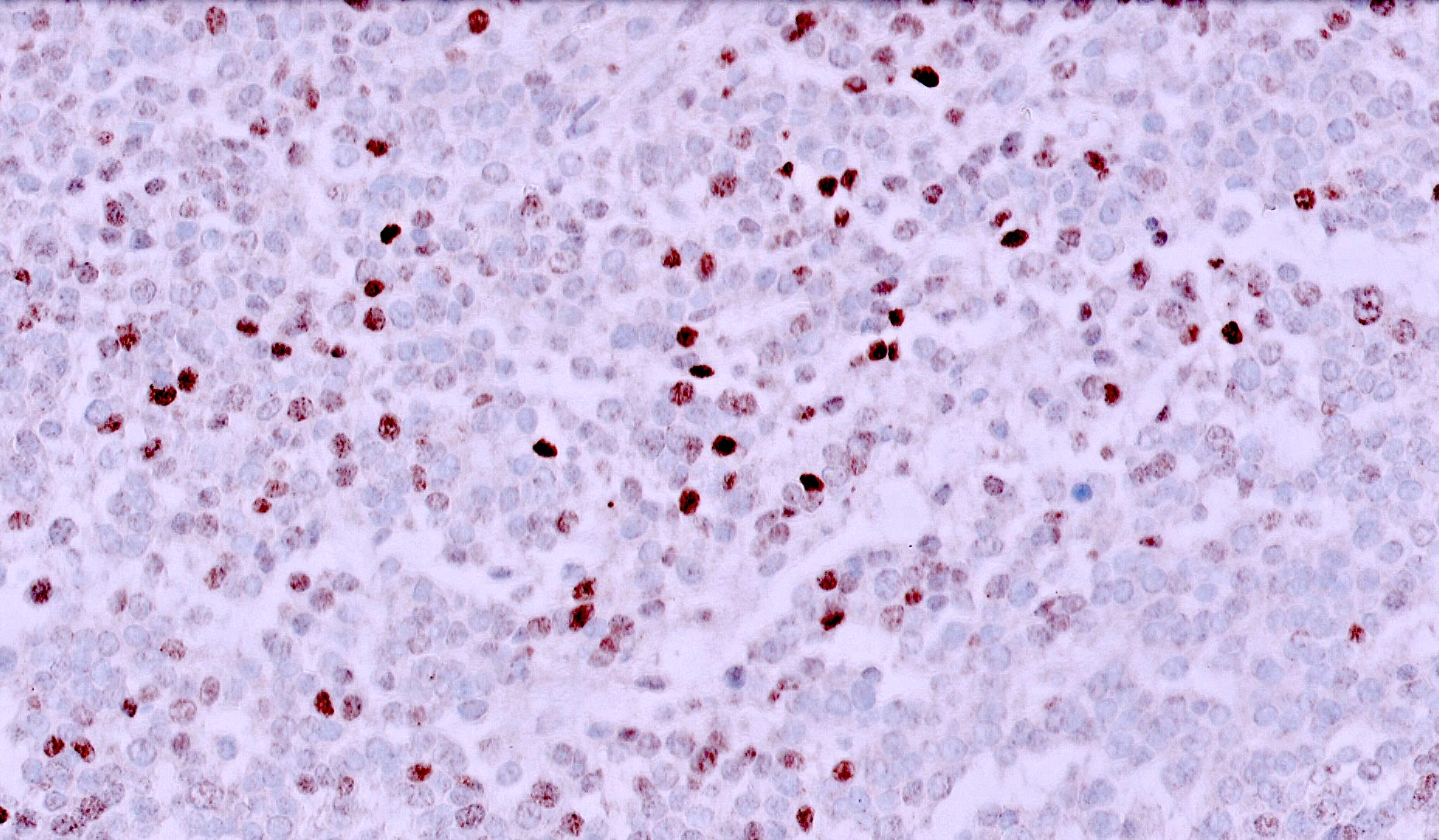
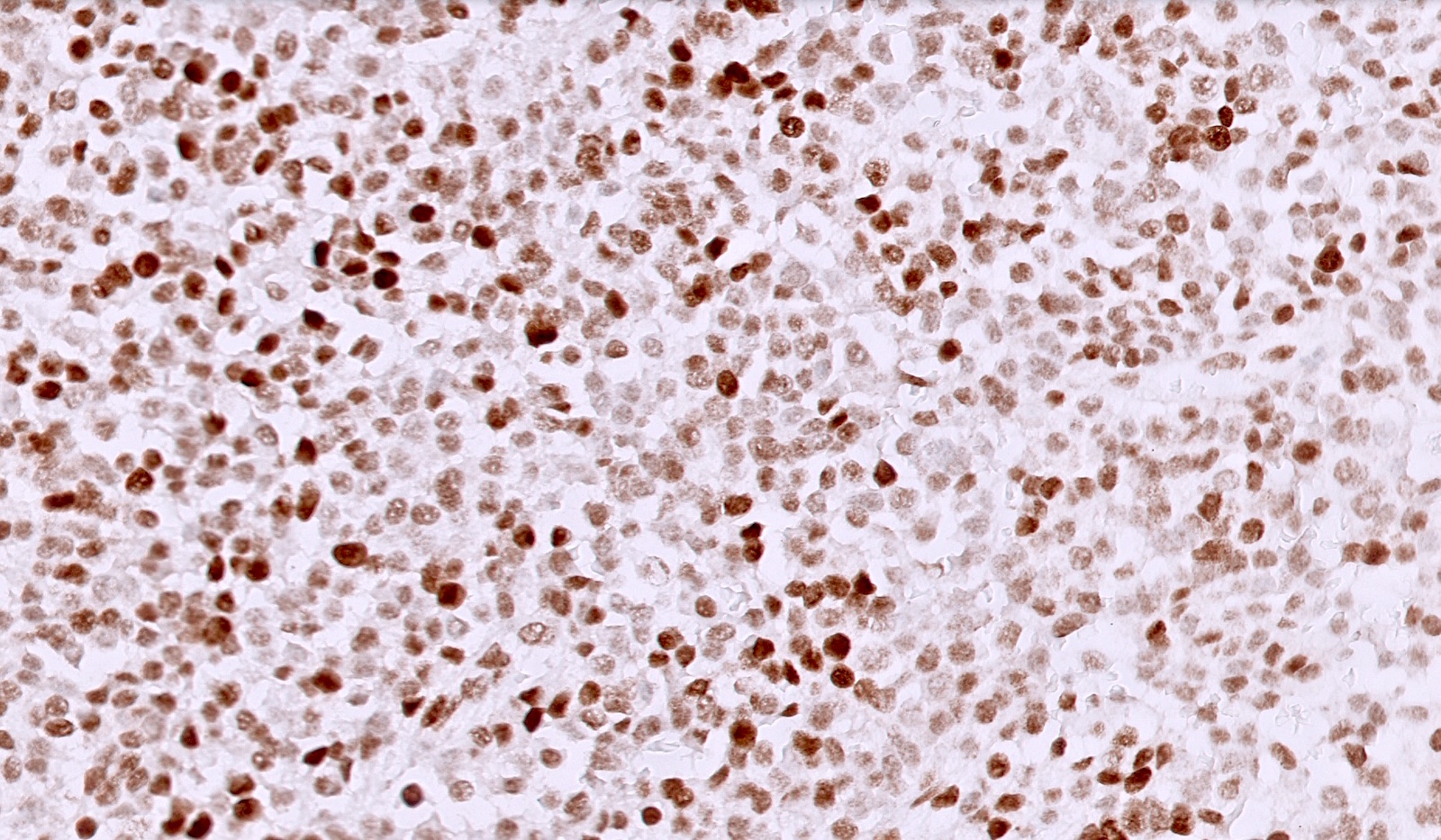
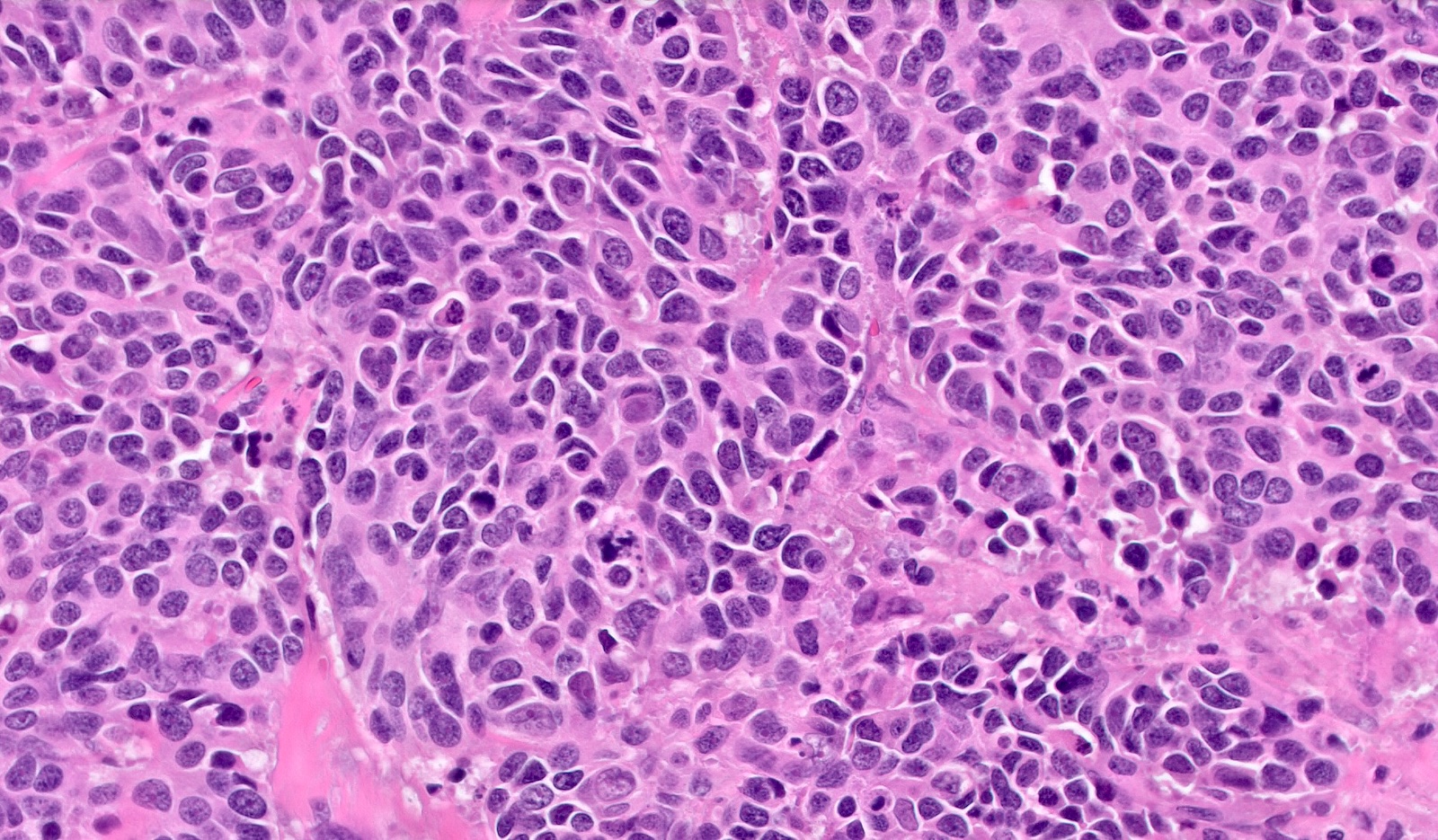
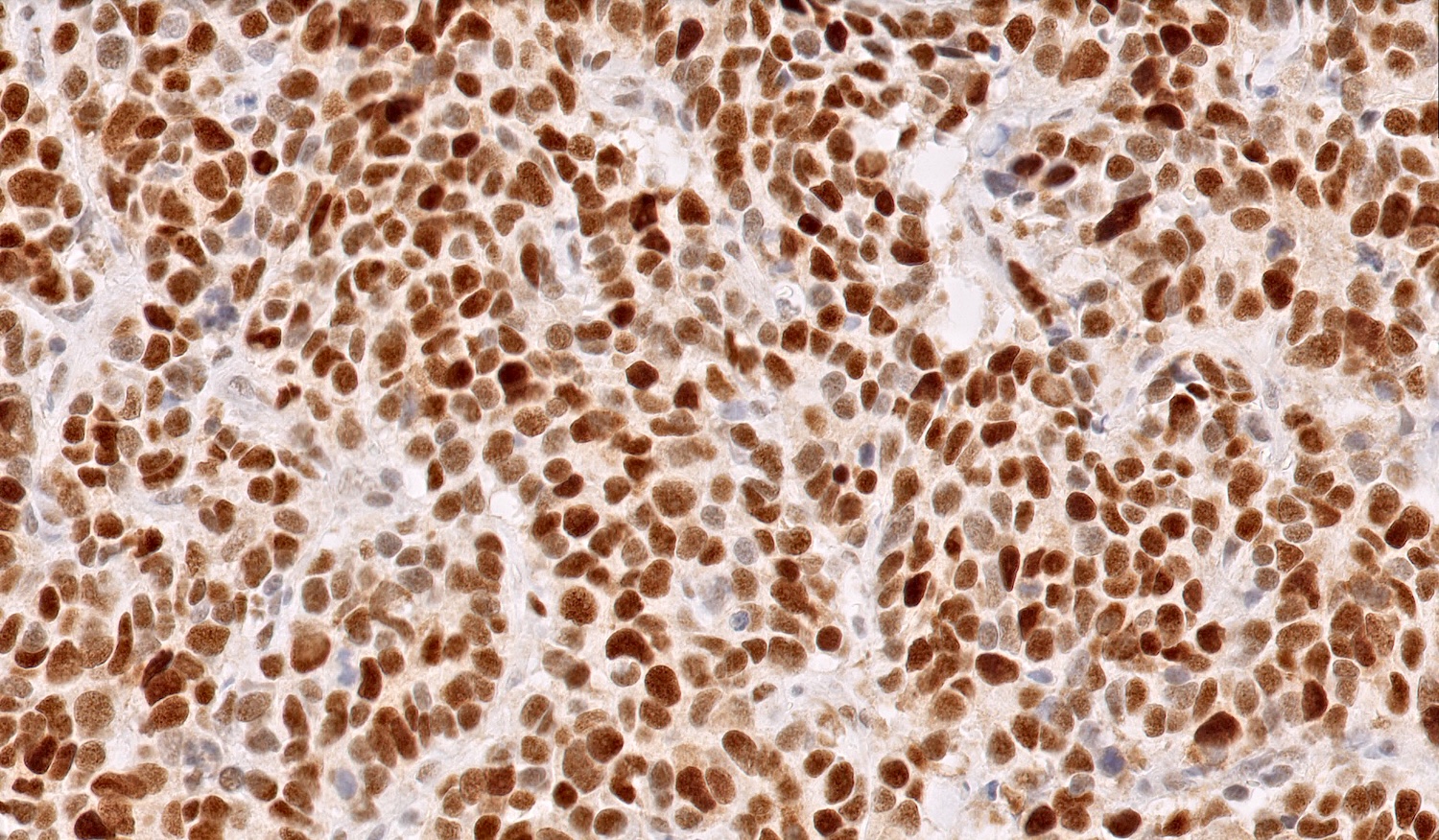
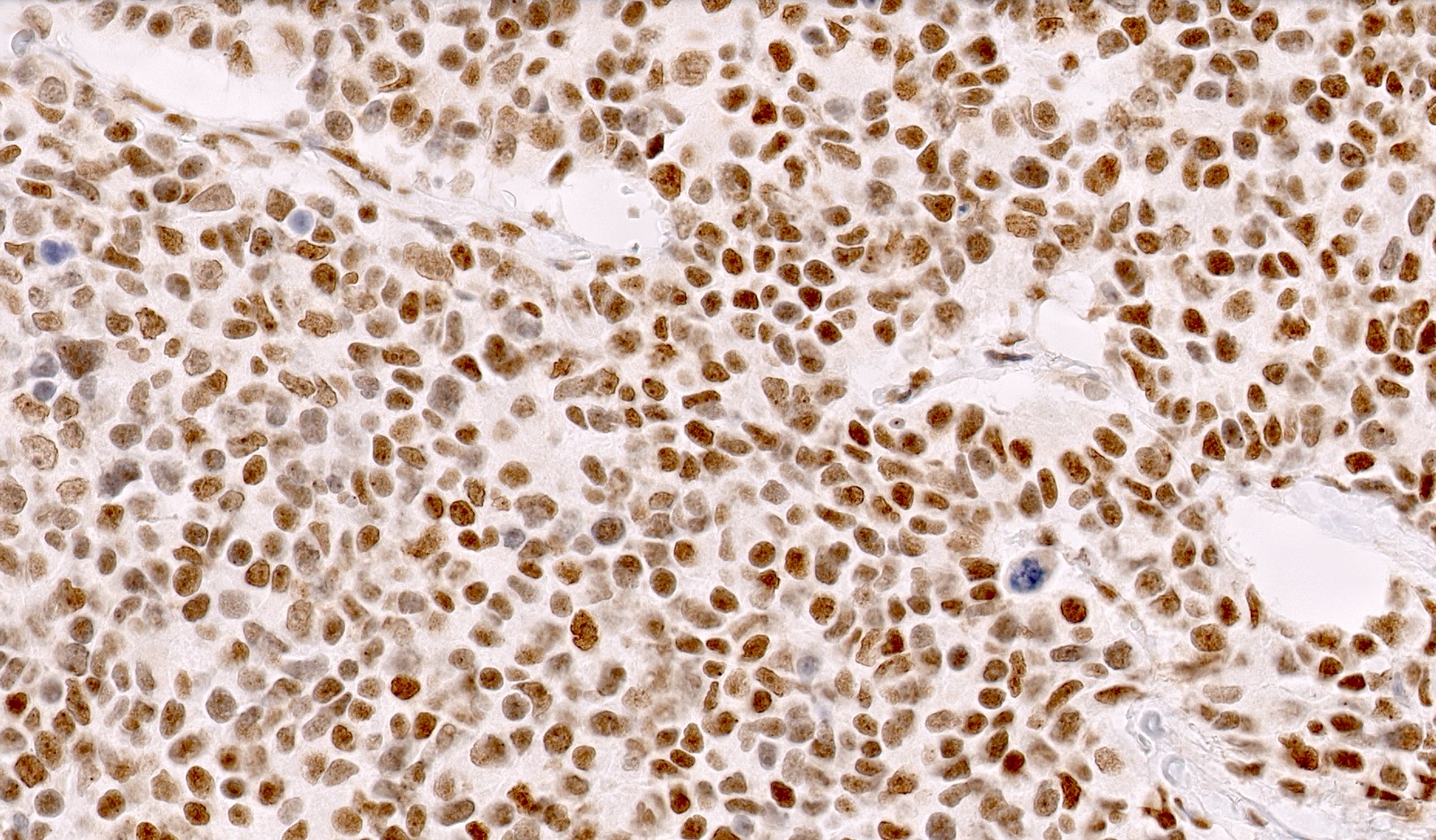
其他参考文献
练习题 #1
VHL 相关胰腺神经内分泌瘤(PanNET)的特征性形态是什么?
- 透明细胞变
- 导管样
- 胰岛增生
- 低分化
练习题答案 #1
A. 透明细胞变。透明细胞变是 VHL 相关 PanNET 的特征性形态改变。VHL 相关 PanNET 既可呈现普通 PanNET 形态,也可出现非常见特征,包括核异型、透明细胞变、嗜酸细胞性细胞学改变及富血管,这与缺氧诱导因子(HIF)激活所致的假性缺氧状态有关。选项 C 不正确,因为胰岛增生表现为胰岛数量增多,可见于胰岛细胞增生症、MEN1 与 VHL 综合征等。选项 B 与 D 不正确,因为导管样形态与低分化形态常见于胰腺神经内分泌癌(大细胞型)。
参考文献:胰腺神经内分泌肿瘤的分子遗传学
练习题 #2
74 岁男性内镜超声(EUS)胰腺肿物活检显示高级别胰腺神经内分泌癌(PanNEC)。PanNEC 中最常突变的基因是?
- ATRX
- DAXX
- MEN1
- TP53
练习题答案 #2
D. TP53。TP53 是 PanNEC 中最常突变的基因。PanNEC 中其他最常见突变为 RB1 与 KRAS。选项 A、B、C 不正确,因为 PanNEC 通常缺乏 ATRX、MEN1 与 DAXX 突变,而这些是胰腺神经内分泌瘤(PanNET)中最常改变的基因之一。
参考文献:胰腺神经内分泌肿瘤的分子遗传学
- PathologyOutlines Textbook Updates 15 Oct 2026: WHO PanNEN = PanNET / PanNEC / MiNEN with distinct molecular landscapes.
- ~40% of PanNETs mutate MEN1, DAXX, ATRX; PanNECs mainly TP53, RB1, KRAS, overlapping ductal adenocarcinoma pathways.
- DAXX/ATRX loss associates with G3 progression and metastasis; multiomics methylation/expression helps separate NET vs NEC.
- Ten histologic/IHC figures (G3 PanNET wild-type p53/intact RB1 vs PanNEC mutant p53) plus two practice questions.
Scope: Full PathologyOutlines topic “Molecular genetics of pancreatic neuroendocrine neoplasms” with histologic images (Textbook Updates 15 October 2026).
Definition / general
- Pancreatic neuroendocrine neoplasms (PanNENs) are classified into 3 groups by WHO tumor classification: pancreatic neuroendocrine tumors (PanNETs), pancreatic neuroendocrine carcinomas (PanNECs) and mixed neuroendocrine nonneuroendocrine neoplasms (MiNENs)
- PanNET: well differentiated neoplasm; graded into 3 tiers (G1, G2 and G3) based on mitotic count and Ki67 proliferation
- PanNEC: poorly differentiated and high grade; subclassified as small cell (SCNEC) or large cell (LCNEC) types
- From a genetic point of view, PanNET, PanNEC and MiNEN show different genetic and epigenetic alterations and expression profiles
Essential features
- ~40% of PanNETs harbor mutations in MEN1, DAXX and ATRX (Endocr Pathol 2025;36:44)
- PanNECs most commonly harbor mutations in TP53 and RB1 and may acquire KRAS mutations similar to pancreatic ductal adenocarcinomas
- Mutation landscape of MiNENs generally reflects the genetic alterations present in each specific neoplastic component
Terminology
- Pancreatic neuroendocrine neoplasms
- Pancreatic neuroendocrine tumor
- Pancreatic neuroendocrine carcinoma
- Mixed neuroendocrine non-neuroendocrine neoplasm
ICD coding
- ICD-O
- ICD-10
- ICD-11
- 2C10.1 - neuroendocrine neoplasms of the pancreas
Somatic mutations
- PanNETs
- Most common mutations: ATRX, DAXX and MEN1 (Hum Pathol 2024;150:51, Nat Commun 2018;9:4158)
- Other recurrent mutations: chromatin remodeling and telomere maintenance (ARID1A, SMARCA4), histone modification (MLL3, SETD2), DNA damage repair (MUTYH, CHEK2, BRCA2, ATM), mTOR signaling pathway (TSC1, TSC2, PTEN, DEPDC5), hypoxia inducible factor (HIF) signaling pathway (EPAS2, VHL) and others including cell cycle regulators such as CDKN1A and CDKN1B
- Rare mutations: TP53 and RB1
- Nearly absent mutations: KRAS and SMAD4 (Nature 2017;543:65, Cancer Discov 2022;12:692, Front Oncol 2022;12:967071, Virchows Arch 2026;488:45)
- PanNECs
- Most common mutations: TP53, RB1, KRAS (World J Gastroenterol 2022;28:1009, Cancer Discov 2022;12:692, Hum Pathol 2018;77:70)
- Less common mutations: BRAF, APC and others
- Typically absent mutations: MEN1, telomere alteration (DAXX / ATRX), DNA damage repair (MUTYH, CHEK2, BRCA2), chromatin remodeling (ARID1A, SMARCA4) and PI3K / mTOR signaling (EWSR1 fusions, PTEN, HIF1A / EPAS2) pathways
- MiNENs
- Mixed ductal adenocarcinoma neuroendocrine carcinomas: genetic alterations of both conventional ductal adenocarcinomas (KRAS, CDKN2A, TP53, SMAD4) and of PanNECs (TP53 and RB1)
- Mixed acinar neuroendocrine carcinomas: changes similar to pure acinar cell carcinomas (APC / β catenin pathway alterations, BRAF rearrangements, DNA repair defects and BRCA pathway defects)
Germline mutations / genetic syndromes
- Familial nonfunctional PanNETs
- Most common mutations: MEN1 (multiple endocrine neoplasia type 1), VHL (von Hippel-Lindau), TSC1 / TSC2 (tuberous sclerosis) and NF1 (neurofibromatosis type 1)
- CDKN1B (MEN4 syndrome) and MAX (MEN5 syndrome)
- GCGR (glucagon cell hyperplasia and neoplasia [GCHN])
- Germline mutation in MUTYH has been reported
- Familial functional PanNETs
- MAFA related familial insulinomatosis: specific mutation p.S64F in MAFA
- Insulinomas: rarely seen in MEN1, NF1 and tuberous sclerosis syndromes
- Glucagonomas: 10% are associated with MEN1 syndrome
- Somatostatinomas: MEN1, VHL, rarely NF1 syndromes
- Gastrinomas: MEN1, NF1 / NF2, tuberous sclerosis syndromes
- Ectopic hormone producing PanNETs: MEN1 and VHL syndromes
Transcriptomics / epigenetic changes
- Multiomics data, such as RNA expression and DNA methylation profiling, can help distinguish PanNETs from PanNECs (Nature 2017;543:65, Cancer Discov 2022;12:692, Front Oncol 2022;12:967071, Virchows Arch 2026;488:45)
- Aberrant DNA methylation in PanNETs is associated with more aggressive tumor behavior, progression and metastasis (Lancet Oncol 2020;21:e431)
- Global DNA hypomethylation: PanNETs with DAXX / ATRX mutations exhibit global DNA hypomethylation, driving alternative lengthening of telomeres (ALT) and chromosomal instability (CIN) (Endocr Relat Cancer 2015;22:L13, Endocr Relat Cancer 2017;24:137)
- Hypermethylation of tumor suppressor genes: most commonly RASSF1A, CDKN2A / TP16, MGMT and RAR beta (Ann Surg 2003;238:423)
- PanNECs may cluster into ductal and acinar types by expression profiling (Cancer Discov 2022;12:692)
Diagrams / tables
Molecular genetic features of PanNETs and PanNECs Feature PanNETs PanNECs Genomic instability Low High Most common somatic mutations MEN1, DAXX, ATRX TP53, RB1 Somatic alterations in progressed PanNET TP53, RB1, CDKN2A Gene fusions KMT2A::BCOR, EWSR1::BEND2 NTRK1::CCDC19, ETV6::NTRK3 RNA expression Can help differentiate PanNETs and PanNECs DNA methylation
References: Front Oncol 2022;12:967071, Virchows Arch 2026;488:45, Hum Pathol 2024;150:51, Nat Commun 2018;9:4158, World J Gastroenterol 2022;28:1009, Cancer Discov 2022;12:692, Hum Pathol 2018;77:70, Mod Pathol 2023;36:100065, Pathol Int 2022;72:411, Cancer Res 2020;80:3620, NPJ Precis Oncol 2025;10:7, Gastroenterology 2018;154:2060, Virchows Arch 2023;482:507, Nature 2017;543:65, Front Oncol 2023;12:1031396, Oncotarget 2018;9:35809
Clinical features
- PanNETs typically present at a median age of 57 years; can be functional (20 - 30%) or nonfunctional (70 - 80%), with the former often manifesting early with hormone related symptoms (Pancreas 2025;54:e423)
- PanNECs present more aggressively with rapid symptom onset; almost always nonfunctional and present with symptoms related to tumor bulk or metastatic disease (Radiographics 2020;40:1240, World J Gastroenterol 2022;28:1009)
Prognostic factors
- In PanNETs, DAXX / ATRX loss is often associated with high grade (G3) progression, metastatic potential and recurrence (Nat Commun 2018;9:4158, Am J Surg Pathol 2016;40:1192, Gut 2022;71:961)
- TP53 mutations can be acquired during high grade transformation of PanNETs and are typically mutually exclusive with CDKN2A alterations in this group (Mod Pathol 2023;36:100065)
- Epigenetic changes / aberrant methylation of certain genes or their promoters, such as CDKN2A and MGMT, are associated with aggressive behavior and poor prognosis in PanNETs (Gastroenterology 2018;154:2060, J Clin Endocrinol Metab 2003;88:1367)
- Mutations in exon 3 of VHL in familial PanNETs, particularly at codons 161 / 167, confer a higher risk of metastasis (Endocr Relat Cancer 2018;25:783)
Case reports
- 45 year old woman with pancreatic tumor and multiple liver metastases (J Clin Med 2025;14:4432)
- 69 year old man presented with weight loss and deterioration of diabetes mellitus (Front Med (Lausanne) 2022;9:951834)
- 81 year old man with abdominal pain, nausea, loose stools and episodic flushing (J Clin Med 2023;12:6617)
Treatment
- Somatostatin analogues (octreotide, lanreotide, etc.) target somatostatin receptors (SSTRs) and represent the most widely used therapy, as ~70% of PanNETs express SSTRs (Endocr Relat Cancer 2008;15:701)
- Everolimus, an mTOR inhibitor, is used in the treatment of PanNETs (Cancers (Basel) 2020;12:1988)
- Belzutifan, a specific HIF-2α inhibitor, has been approved for the treatment of VHL disease and its related tumors (Clin Cancer Res 2022;28:4843)
Microscopic (histologic) description
- PanNETs: well differentiated tumors with nested, organoid and trabecular architecture; uniform nuclei with mild atypia
- PanNECs: poorly differentiated carcinomas with expansile and irregular nests to solid structures containing necrosis (single cell or in large areas), more nuclear atypia; can be classified as small or large cell type (Am J Clin Pathol 2025;163:804, Histopathology 2018;72:168, Am J Surg Pathol 2016;40:1192)
- VHL mutated PanNETs: may show features of nuclear atypia, clear cell change, oncocytic change, hypervascularity, islet dysplasia and cystic morphology
Microscopic (histologic) images
Contributed by Yan Hu, M.D., Ph.D. and Wei Chen, M.D., Ph.D.
Additional references
Practice question #1
What is a distinct morphology of VHL related pancreatic neuroendocrine tumors (PanNETs)?
- Clear cell change
- Ductal
- Islet hyperplasia
- Poorly differentiated
Practice answer #1
A. Clear cell change. Clear cell change is a characteristic morphologic change of VHL related PanNETs. VHL related PanNETs exhibit both common PanNET morphology and their unusual features. Those features include nuclear atypia, clear cell change, oncocytic cytology and hypervascularity, which is due to the pseudohypoxic state caused by activation of hypoxia inducible factor (HIF). Answer C is incorrect because islet hyperplasia shows an increased number of islets, which are associated with nesidioblastosis, MEN1 and VHL syndromes, among others. Answers B and D are incorrect because ductal morphology and poorly differentiated morphology are commonly seen in pancreatic neuroendocrine carcinomas, large cell type.
Reference: Molecular genetics of pancreatic neuroendocrine neoplasms
Practice question #2
An endoscopic ultrasound (EUS) pancreatic mass biopsy from a 74 year old man demonstrates a high grade pancreatic neuroendocrine carcinoma (PanNEC). What is the most commonly mutated gene in PanNECs?
- ATRX
- DAXX
- MEN1
- TP53
Practice answer #2
D.TP53. TP53 is the most commonly mutated gene in PanNECs. The other most common mutations in PanNECs are RB1 and KRAS. Answers A, B and C are incorrect because PanNECs typically lack mutations in ATRX, MEN1 and DAXX, which are among the most frequently altered genes in pancreatic neuroendocrine tumors (PanNETs).
Reference: Molecular genetics of pancreatic neuroendocrine neoplasms